You live in the house. You need a photographed action plan of what to do on this lot, independent of contractor sales, and this visit is not a listing or escrow file.
If the job is a sale file, use defensible space documentation for real estate transactions. If the job is common area, use the HOA Common-Area Defensible Space Inspection.
The report is a photographed action plan for this address: what comes out, what can stay, and where to start, with a photograph behind each item.
Your insurer is asking for proof, or you want to know what to fix before renewal. You leave with a photographed list of what to address and what can stay. Ask your carrier what it accepts.
A listing clock, a buyer’s investigation, or an escrow packet is a different use of the same visit. That path is written for the transaction team.
The written agreement controls. Unless it says otherwise, the visit is visual and non-invasive.
I inspect against Zone 0 requirements, the WUI building code, and recognized best practice. The report tells you which is which.
I visually review observable conditions in these groups, photograph them, and give you prioritized observations.
The 0-5, 5-30, and 30-100 foot ground: combustible mulch and debris, plant height and spacing, trees, ladder fuels, and clearance from roofs, walls, chimneys, and eaves.
Zone 0Roof surface and valleys, rain gutters, combustible debris, visible material condition, damaged tiles or shingles, and gutter guards.
Zone 0 and WUI codeAttic, eave, soffit, and foundation vents; visible mesh or vent assemblies; chimney and stovepipe outlets; spark arrestors.
WUI code, not the Zone 0 draftSiding and cladding in the first five feet, visible gaps or penetrations, glazing and skylights, frames, exterior doors, screens, and weather stripping.
WUI code, not the Zone 0 draftAreas below decks, balconies, stairs, and pergolas; surfaces and decking; visible base screening; furniture and cushions.
Zone 0 and WUI codeAttachment or near-structure transition, combustible fencing in the first five feet, fence-line vegetation, and whether gates operate for emergency access.
Zone 0Location and visible construction of sheds, storage buildings, and other outbuildings in the near-structure zone.
Zone 0A dated photographed file of what was observable on the inspection date, with notes you can take to the authority or a licensed professional.
Record-keeping, not Zone 0On the same walk I also review visible propane and utility conditions, hose reach, extinguishers, and whether the address is legible from the street. Those sit in fire code and preparedness, not in the Zone 0 draft.
| Deliverable | Typical checklist walk | This inspection |
|---|---|---|
| Who walks it | A DIY app, or an on-site walk that produces a compliance checklist | An independent inspector is on site, and you keep every construction decision. |
| What gets reviewed | Zone 0 perimeter: roof, gutters, vents, deck, fencing, and attached structures | The components above, plus climate that day, surroundings within about a mile, fire-department access, neighboring structures, and all three ignition zones |
| Photographs | Photographs are an extra-cost add-on on some walks, or a snap-and-rate on an app. | A photograph is included behind every recommendation. |
| What you leave with | A color rating or a compliance checklist | You leave with a dated photographed action plan, detailed enough to act on. |
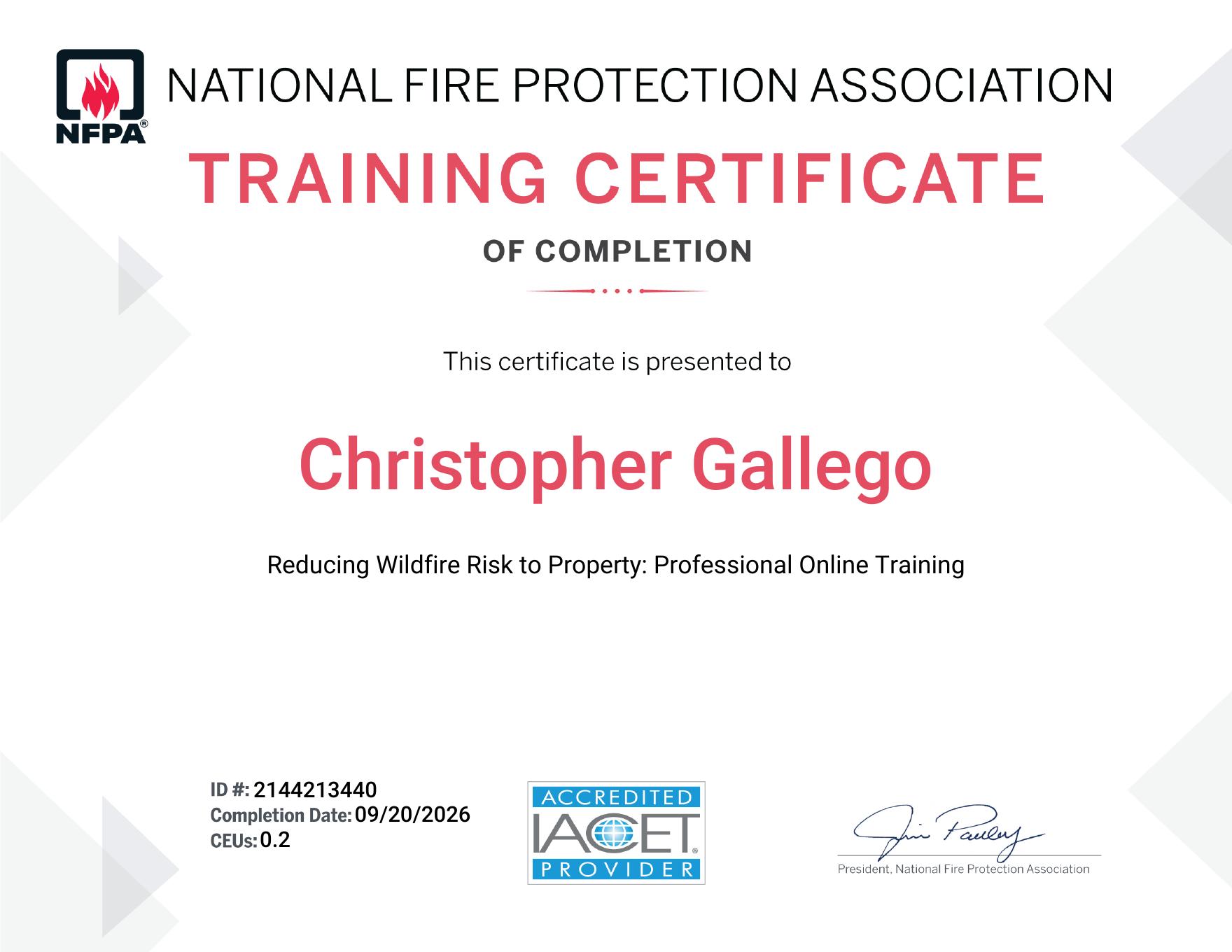
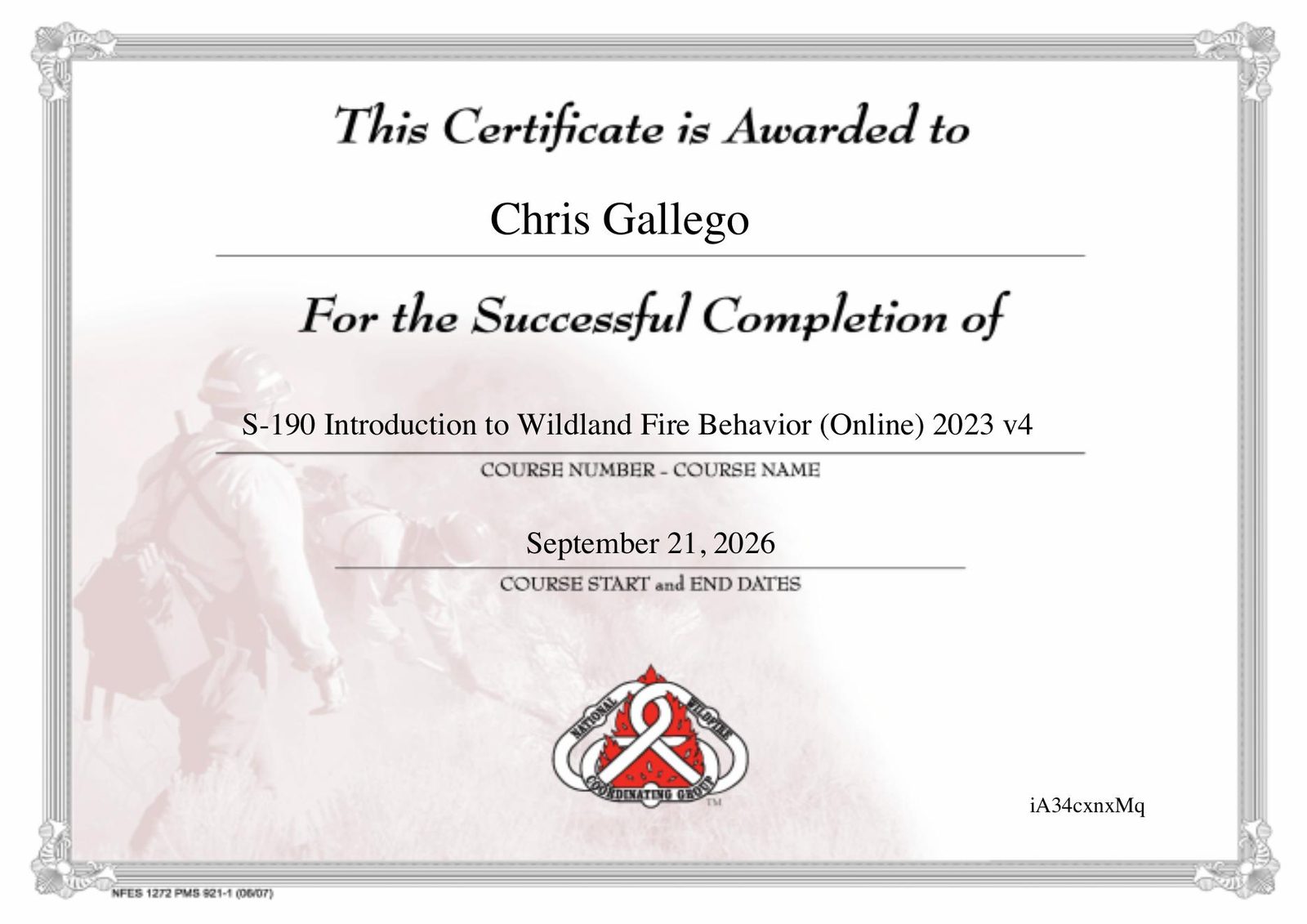
| NFPA training | Not listed | Completed NFPA's Reducing Wildfire Risk to Property professional training (certificate 2144213440, September 2026) |
| NFPA certification | Not listed | Currently enrolled in NFPA's Certified Wildfire Mitigation Specialist program, with certification pending. |
| Independence | The file is often meant to share with contractors. | There are no contractor sales, no bid from the visit, and nobody is paid to send you to a crew. |
A typical walk produces a checklist, and this visit produces a photographed action plan for the whole property.

A photographed action plan for this address, independent of contractor sales. The button sends a request, and a signed agreement still comes before I walk the lot.
One house and the grounds named in the agreement. Visual, non-invasive, with a photograph behind every recommendation.
Cancellations with less than 24 hours’ notice keep 50% of the fee. See Terms.
Book Your InspectionI do not sell the repair, and nobody is paid to send you to a crew. You keep every construction decision.
You get a sequence for this property: what to address, what can stay, and the first moves.
City, county, and statewide Zone 0 rules differ. The report shows what is here, so you know what to ask the fire authority.
No opening walls, no destructive testing, and no climbing where it is not safe.
No. Unless the agreement says otherwise, observable defensible-space conditions are reviewed across the property as scoped, including the structure, the ground around it, nearby structures and separation, and fire-department access.
No. I inspect observable conditions, photograph them, and give you prioritized observations. I do not install, repair, replace, certify, or perform licensed construction work. If something needs correction, you choose and contract directly with the qualified trade for that work.
No. This page is the homeowner visit. Use defensible space documentation for real estate transactions when the file has to travel with a sale, a buyer’s investigation, or escrow. The walk is the same $249 residential inspection. The paperwork job is not.
That is not promised. The report is a dated record of observable conditions. What a carrier does with a private file is the carrier’s decision. Ask them what they accept before you treat this as an insurance document.
It is the discipline behind the walk: observable ignition-zone conditions, photographed and prioritized. The product name on this page is a defensible space inspection, which is the phrase San Diego fee schedules already use.